— Case Study · 2 min read
Dexcom EMEA
From Support Insight
to Product Proposal
A single webpage was generating roughly 7,500 support requests per year — and no one had connected the problem to its cause yet. I was hired to answer the calls. I ended up building the case for making them stop.
Hired to
Customer support agent for the newly launched Italian market.
Ended up
Customer journey analysis, root cause identification, internal product proposal with full business case.
~7,500
Service requests
from a single webpage
€20K
Estimated operational cost
(SR volume × avg. resolution time × hourly cost)
1 page
Root cause
Dexcom is a global medical technology company specializing in continuous glucose monitoring systems for people living with diabetes. With operations across 50+ countries, their EMEA division supports millions of patients navigating daily life with their devices. The Italian market had just launched, and I was one of the first agents handling it.
Patients were calling because they couldn't figure out if their device was compatible. The page they landed on was dense, technical, and structured for internal logic — not for someone making a purchasing decision. No hierarchy, no warnings, no guidance. The problem wasn't in the product. It was in the information architecture of a single page.
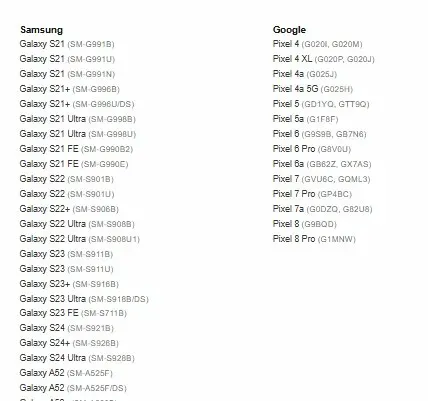
↑ The original page: a wall of technical text with no visual hierarchy and no warnings for edge cases (e.g. incompatible Android variants).
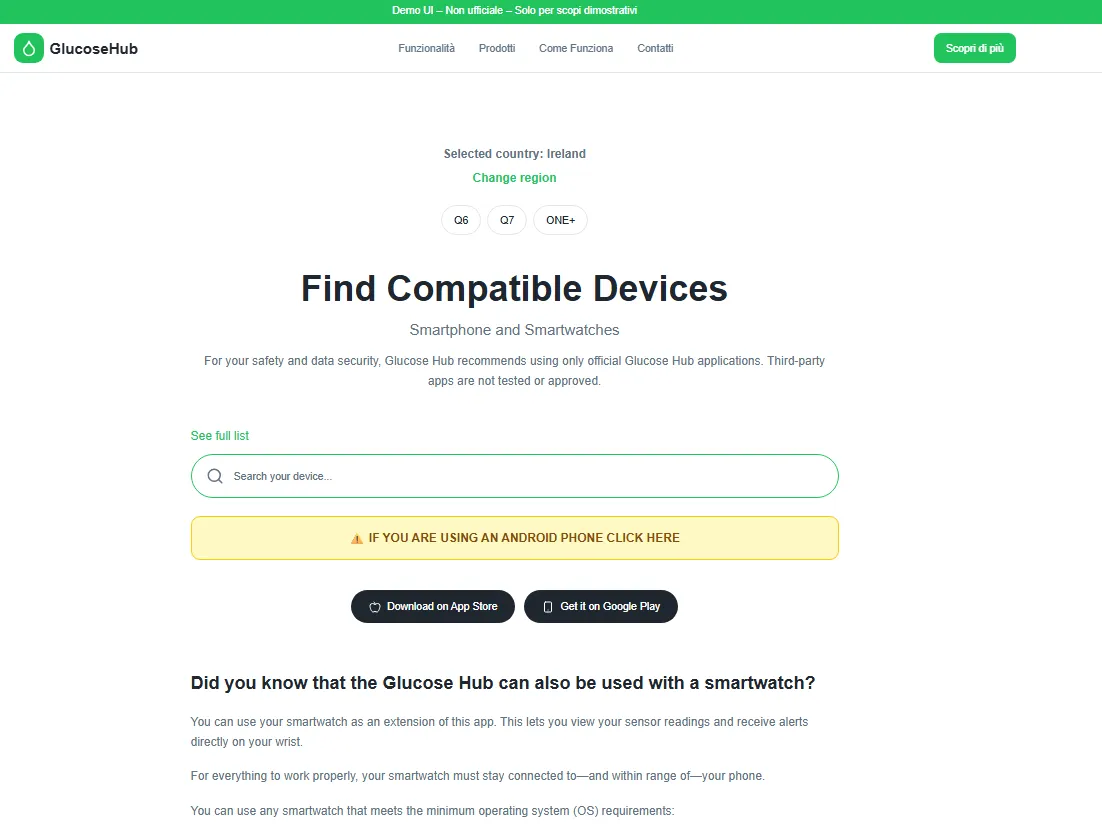
↑ GlucoseHub: the working prototype I built to make the case concrete — with country selector, device search, and Android warning banner.
I mapped the full customer journey: search → find list → assume compatible → purchase → discover incompatibility → call angry. I then cross-referenced call volume by category with average handling time and estimated hourly cost. The result was a precise number, not a feeling.
Restructure the compatibility page into clear categories, add variant-level warnings for Android devices, and implement visual hierarchy that prevents false confidence before purchase. To make the case concrete, I built a working demo — GlucoseHub. Operational cost: around €20K. The unmeasurable cost — brand trust, first impressions, patients lost to competitors — was the real argument.
↳ Why not an email campaign or a chatbot?
The problem was upstream, in the information architecture of the page itself. Communication fixes wouldn't change the call rate — they'd only shift the moment when patients discovered the incompatibility.
Proposal presented internally with full business case, cross-functional stakeholder mapping, and implementation timeline.
I would have tracked call volume by category from day one, not reconstructed it after the fact. Having a precise real-time baseline would have made the business case much harder to dismiss — and would have let me present it earlier.
The best marketing fix isn't always a campaign.
Sometimes it's a webpage.